

Product Safety Consulting in USA for Regulatory Compliance and Risk Control
Product safety consulting has become an essential service for companies operating in highly regulated U.S. industries. As federal and state regulations evolve, organizations must demonstrate that their products meet established safety, quality, and performance requirements. Ensuring regulatory compliance is no longer optional. It is a scientific and legal obligation that protects consumers, reduces the likelihood of recalls, and strengthens long term business sustainability.
Product safety consultants help manufacturers, importers, and distributors interpret complex regulations and implement risk control strategies. Their work spans a wide range of sectors including pharmaceuticals, medical devices, consumer goods, chemicals, electronics, automotive equipment, and food products. In this environment, expert guidance provides the structured support needed to navigate federal agencies, implement testing requirements, and maintain compliance throughout a product’s lifecycle.
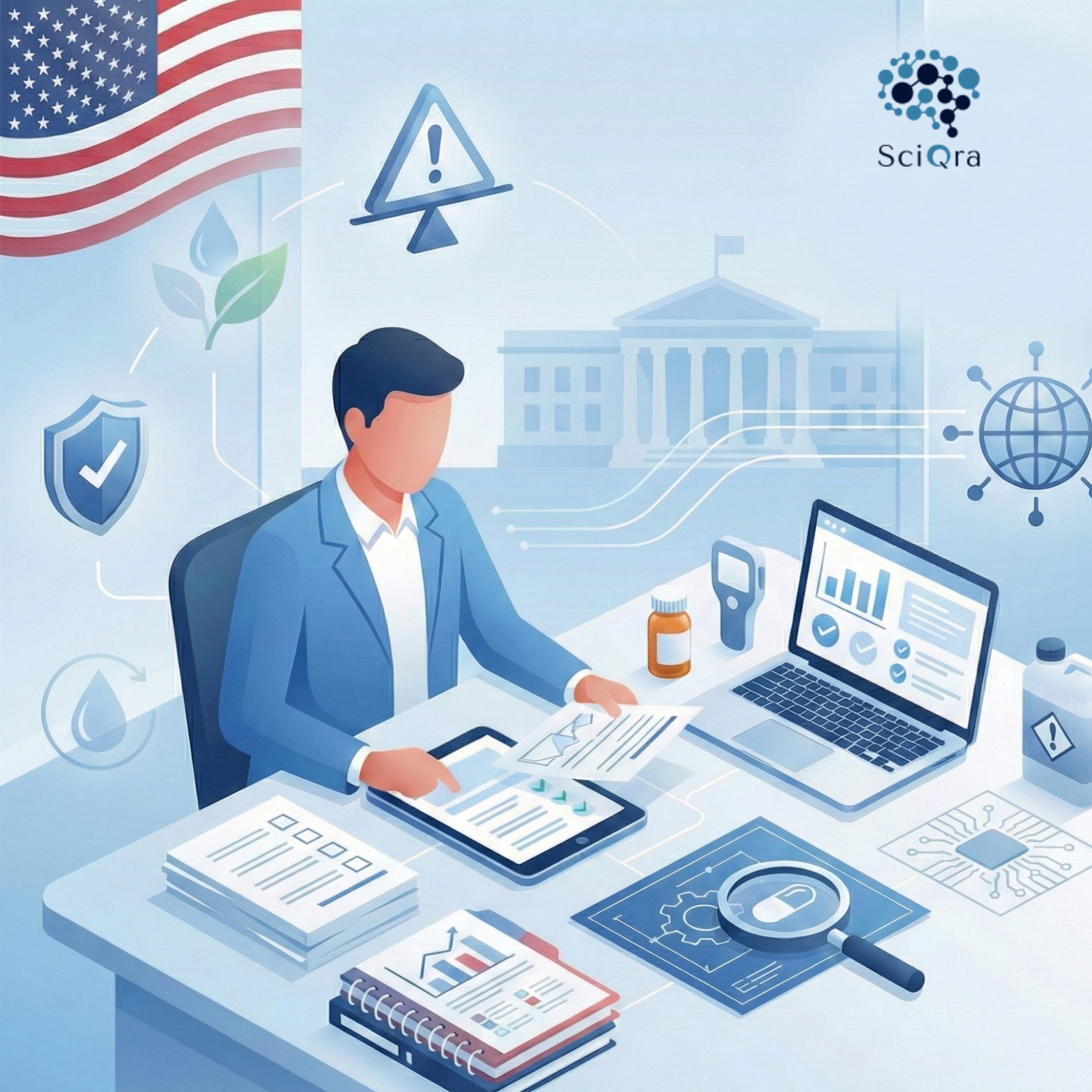
Regulatory Landscape in the United States
The United States regulatory ecosystem is multi layered and involves several federal agencies, state authorities, and international standard setting bodies. Each plays a significant role in product oversight. Understanding this landscape is critical for effective risk control and compliance.
Consumer Product Safety Commission
The Consumer Product Safety Commission oversees a broad range of consumer goods such as toys, electronics, furniture, and household products. The agency administers statutes including the Consumer Product Safety Act and the Federal Hazardous Substances Act. Responsibilities include setting mandatory standards, monitoring incidents, enforcing recalls, and ensuring that companies provide accurate labeling and warnings.
Food and Drug Administration
The Food and Drug Administration regulates pharmaceuticals, medical devices, food, dietary supplements, and cosmetics. Statutes such as the Food Drug and Cosmetic Act and the Medical Device Amendments form the basis of regulatory oversight. The agency manages premarket review systems, labeling requirements, post market surveillance, and enforcement of Good Manufacturing Practices.
Environmental Protection Agency
The Environmental Protection Agency governs chemicals under the Toxic Substances Control Act and pesticides under the Federal Insecticide, Fungicide, and Rodenticide Act. Responsibilities include chemical risk assessments, environmental testing, and implementation of chemical safety programs.
Occupational Safety and Health Administration
The Occupational Safety and Health Administration ensures workplace safety involving chemicals, machinery, electrical systems, and equipment. Its rules define hazard communication standards and exposure controls to protect workers.
National Highway Traffic Safety Administration
The National Highway Traffic Safety Administration monitors vehicle safety and automotive equipment. Requirements include crashworthiness, mechanical reliability evaluation, and performance testing.
State and International Requirements
Certain states, such as California, enforce stricter regulations. Proposition 65 requires warnings for exposures to specific hazardous substances. Companies must also consider international harmonization standards from ISO, IEC, ANSI, ASTM, and OECD when products are sold globally.
Role of Product Safety Consulting
Product safety consultants support organizations by translating regulatory requirements into actionable programs. Their goal is to help companies align product design, development, manufacturing, and documentation with applicable regulations. Services typically include:
Gap Analysis and Auditing
Consultants compare current company practices with regulatory requirements. They identify gaps in testing, labeling, documentation, or risk control systems and propose corrective actions.
Risk Assessment
Risk assessments form the foundation of compliance. Consultants apply scientific models including Failure Mode and Effects Analysis, Hazard Analysis and Critical Control Points, Probabilistic Risk Assessment, and human factors evaluations. These tools help quantify hazards and determine which risks require immediate control.
Testing and Certification Support
Products may need laboratory testing and certification from organizations such as UL, NSF, or other third party labs. Consultants guide companies through selection of testing protocols, preparation of technical documents, and communication with certification bodies.
Compliance Program Development
Consultants assist in building internal systems that support continuous compliance. This includes preparing Standard Operating Procedures, recordkeeping plans, staff training materials, and quality management approaches.
Regulatory Submission Preparation
For regulated industries such as pharmaceuticals and medical devices, consultants help prepare documentation for submissions including 510(k) filings, premarket approval applications, GRAS notifications, and CPSC required reports.
Recall and Incident Management
Consultants also support development of recall plans and post incident investigations. They help ensure that communication with regulators and consumers meets regulatory standards and reduces liability.
Training and Education
Training programs ensure that teams understand current regulatory expectations, risk assessment techniques, and standard operating procedures.
Key Phases of Product Safety Consulting
Effective consulting follows a structured process:
Review of the product, target market, materials, and regulatory obligations.
Hazard identification and mapping of potential physical, chemical, biological, and user related hazards.
Quantitative and qualitative risk evaluation.
Development of mitigation strategies, engineering controls, and labeling recommendations.
Implementation of controls and verification that they function effectively.
Documentation and audit preparation.
Continuous improvement based on new regulatory guidance and postmarket data.
Regulatory Compliance Strategies
Proactive Compliance Planning
Early engagement reduces cost and prevents design related compliance failures. Planning may include regulatory intelligence scanning to identify upcoming rules, review of applicable standards, and early stage risk assessments.
Risk Control Measures
Risk control is achieved through design modifications, protective features, warning labels, process controls, and quality checkpoints. Consultants help determine when risks can be eliminated, reduced, or communicated.
Standards Based Compliance
Products must comply with national and international standards. Consultants help interpret standards from UL, ISO, IEC, ASTM, FDA, EPA, and OSHA. This alignment ensures that design, testing, and documentation meet recognized scientific and regulatory expectations.
Risk Management Methods
Hazard identification involves multiple tools including design reviews, fault tree analysis, failure mode assessments, human factors evaluations, and scenario based analysis. Risk evaluation considers severity, likelihood, and exposure. Controls may include engineering improvements, administrative procedures, and protective equipment.
Post market Surveillance
After a product reaches the market, organizations must monitor real world performance. Postmarket surveillance includes:
Customer feedback systems
Reporting mechanisms for adverse events
Periodic quality audits
Regulatory updates
Consultants design surveillance systems that help organizations respond quickly to safety concerns and maintain compliance.
Challenges in Product Safety Consulting
Several challenges influence product safety work:
● Rapid changes in federal and state regulations
● Multiple regulatory frameworks across industries
● Resource limitations in small and mid sized companies
● Complexity of global supply chains
● Increasing litigation and liability risks
Consultants help organizations navigate these challenges through preventive strategies, structured documentation, and thorough risk analysis.
Industry Applications
A wide range of industries benefit from product safety consulting. Pharmaceuticals rely on toxicology, labeling review, and GMP alignment. Medical device companies require biocompatibility evaluations, usability testing, and submission support. Consumer goods companies address physical and chemical hazards with recall and labeling strategies. Electronics manufacturers handle electrical and fire safety evaluations. Food and agricultural operations rely on microbial safety assessments and HACCP programs. Automotive companies conduct mechanical and electronic safety system testing.
Selecting a Product Safety Consultant
Key considerations include:
● Regulatory experience and current knowledge of standards
● Accreditation by relevant professional organizations
● Ability to support multi regulatory domains
● Capacity to design customized solutions
● Clear and actionable communication
Effective consultants provide regular updates, structured reporting, and guidance that supports both safety and business objectives.
Future Trends
The field is evolving in several directions. Digital tools enable advanced risk modeling, compliance tracking, and automated documentation. Companies are seeking integrated global compliance strategies that align U.S., European, and Asia Pacific requirements. Environmental expectations are driving interest in eco safety consulting, sustainability standards, and circular economy practices.
Conclusion
Product safety consulting plays a central role in ensuring that products in the United States meet regulatory expectations, protect consumers, and support business continuity. By integrating risk assessment, regulatory strategy, documentation, and continuous improvement, consultants help organizations navigate a complex regulatory landscape. Companies that invest in structured product safety systems are better prepared to innovate responsibly, maintain compliance, and manage evolving risks in competitive markets.
